Before Kyle Road became the beginning of a memoir, it was simply home—a farmhouse, a barn, grandparents a mile away, Sunday mornings at church, and endless adventures for a boy growing up in rural Ohio.
When I think about growing up in rural Ohio, I don’t first remember a town or a place on a map.
I remember Kyle Road.
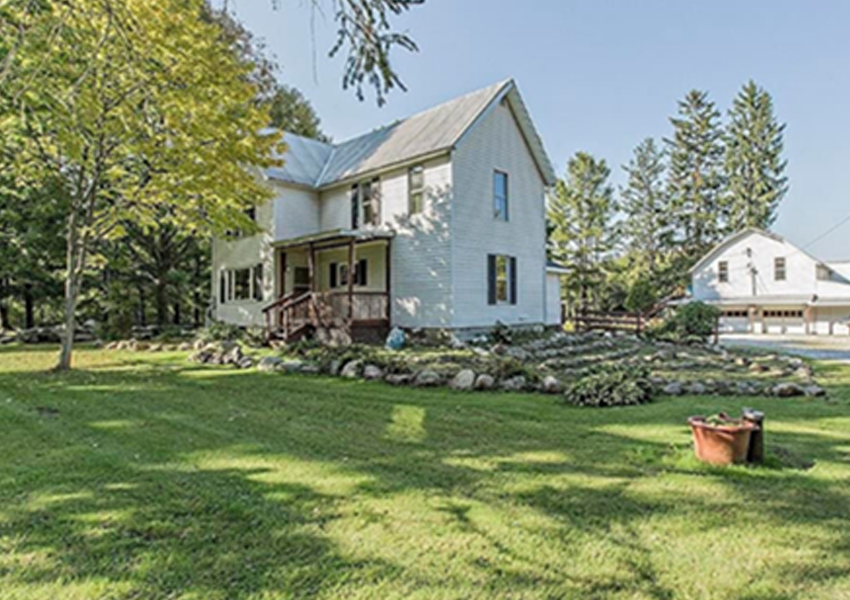
Our house stood at the end of that road outside Dorset, Ohio, surrounded by fields, woods, barns, and the places that became the boundaries of my childhood world. It was a large, two-story farmhouse built around 1880, and my parents had put a great deal of work into making it our home.
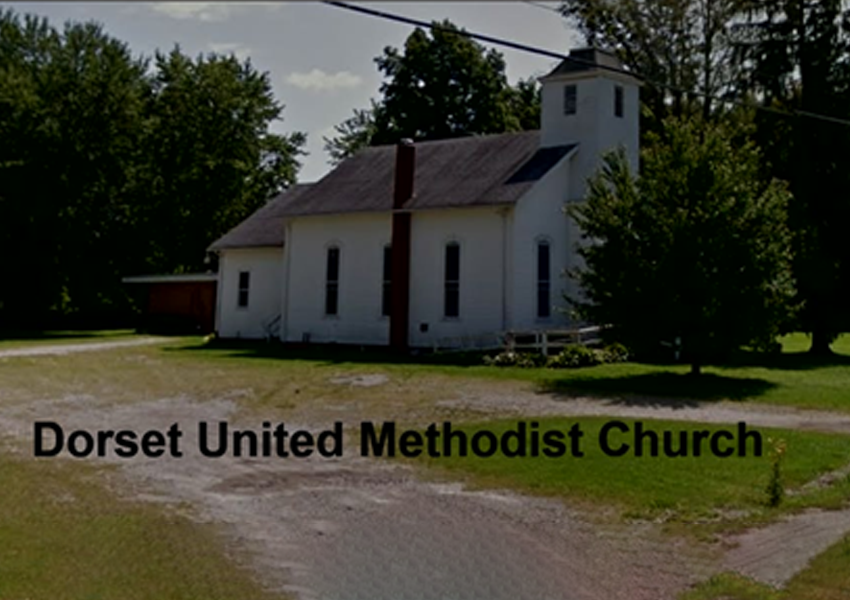
About a mile away was my grandparents’ dairy farm, where roughly fifty Holstein cows were milked twice each day. Between our farm, their farm, Dorset Methodist Church, the Community Center, school, and the homes of relatives and neighbors, there was a whole world for a young boy to discover.
At the time, I didn’t think of it as “life in small-town America.”
It was simply home.
What Small-Town Ohio Looked Like
Some of my strongest memories are surprisingly ordinary ones.
There was the barn with its hayloft, the tractor shed, the workshop, the chickens, the woods, and the old logging road. There were places where children could turn ordinary farm equipment into something much more exciting with a little imagination.
I remember climbing into the hay baler and pretending it was a spaceship. In my imagination, that piece of farm machinery could take me far beyond Kyle Road.
There were tractor rides, too. On hot days, I sometimes carried water in a Mason jar while riding along. There were hay forts to build and adventures in the hayloft. There were woods to explore and countless opportunities for a curious boy to discover how things worked—and occasionally discover how they shouldn’t be used.
Those experiences didn’t seem important enough to remember forever.
Yet more than sixty years later, I remember them.
Perhaps that is one of the surprises of getting older. The moments that remain with us are not always the ones we would have expected.
Family, Farm Work, and Everyday Responsibility
Growing up in rural Ohio also meant that family was never very far away.
My McMillion grandparents lived only about a mile from us. Their dairy farm was part of the landscape of my childhood. I can still picture the Holsteins standing in their stanchions and the milking machines doing their work.
My Reynolds grandparents were part of my childhood as well. Their world included grading and candling eggs and creating things from seashells. Both sets of grandparents contributed memories and lessons that I carried with me long after childhood ended.
Our own family was growing during those years. I was the oldest child, followed by my brother Mike and my sister Margaret Ann. Later, foster children became part of our household, expanding my understanding of what it meant to call someone family.
Much of growing up in rural Ohio happened around the kitchen table. Meals were shared, stories were retold until everyone could recite them, and grandparents were part of the daily landscape rather than occasional visitors. Family was the first classroom. Patience, thrift, and showing up on time were taught by example far more often than by lecture.
Looking back, I realize what a gift that was.
As a child, I didn’t analyze any of this.
Family was simply there.
Neighbors, School, and Close-Knit Communities
Farm life provided plenty of opportunities to learn responsibility, although I’m not sure I recognized them as lessons at the time.
I liked being a helper.
My father was colorblind, and I remember helping him sort electronic resistors by their colored bands. To a little boy, it was simply a chance to do something important with Dad. Years later, I could see something else in that memory: an early curiosity about electronics and a desire to understand how things worked.
That curiosity would follow me far beyond Kyle Road.
So would the expectation that everyone had a part to play.
Work was simply woven into family life. Things needed to be done, and someone had to do them. Sometimes that meant farm work. Sometimes it meant cleaning, helping around the house, or preparing for Sunday.
Responsibility wasn’t usually announced as a lesson.
It was learned by living.
Faith and the Values That Held Things Together
Sunday mornings meant Dorset Methodist Church.
Church wasn’t an occasional event in our family. It was part of the rhythm of the week. Our family had its familiar place in the pew, and the church became one of the places where I first experienced faith as something connected to family and community.
Some of my earliest lessons in faith happened at home as well. At naptime, my mother read to me from a children’s Bible storybook. I couldn’t have known then that faith would eventually become such a central part of my life.
There was another center of community life in Dorset: the Community Center.
Friday nights meant roller skating. There was music, the Hokey Pokey, and the special treat of getting a bottle of soda pop. For a child growing up in a small rural community, it didn’t take elaborate entertainment to make an evening memorable.
That was life in small-town America as I knew it.
Churches, neighbors, relatives, school friends, and community gatherings overlapped. People knew one another. They knew your parents. Often, they knew your grandparents too.
You belonged somewhere.
The Adventures We Created
Children didn’t need much encouragement to turn a farm into an adventure.
A hayloft could become a fort. A pair of stirrups hanging from a beam could become a ride on a horse across the countryside. Woods could become unexplored territory. A hay baler could become a spaceship.
There were also plenty of opportunities to get into trouble.
Some of my childhood adventures were funny. Others were frightening. A few taught lessons that stayed with me.
But that freedom to explore was an important part of growing up in rural Ohio. We didn’t have to travel somewhere special to find adventure. Most days, it was waiting just outside the door.
We simply had to imagine it.
When Kyle Road Became a Memory
Eventually, our family left Dorset.
I was eight years old when Dad’s work took us away. A Mayflower moving truck came to carry our belongings to our new home. Dad’s Cub Farmall tractor went with us. So did Mom’s electric organ.
But not everything could go.
Our dog, Queeny, stayed behind.
For a boy who had known little beyond that farm and community, leaving Kyle Road meant more than changing houses. The familiar world of grandparents nearby, barns, fields, church, friends, and country roads was suddenly becoming memory.
I couldn’t have understood then how often life would take me down other roads.
There would be other towns, other homes, other jobs, a family of my own, military service, ministry, successes, disappointments, love, loss, and unexpected opportunities.
But in one way or another, part of me always carried Kyle Road along.
How Growing Up in Rural Ohio Shapes Adulthood
Looking back now, I don’t want to pretend that rural childhood was perfect.
It wasn’t.
Life had hardships. Families had problems. Children made mistakes. Communities were made up of imperfect people, just as they are today.
But growing up at the end of Kyle Road gave me something I didn’t fully appreciate until much later.
It gave me roots.
It taught me that family matters. That work has value. That faith can begin in very ordinary places. That helping someone doesn’t always require recognition. And that some of life’s most important moments don’t seem important while they are happening.
Sometimes they look like a boy carrying a Mason jar of water on a tractor.
Sometimes they sound like roller skates crossing the floor of a small-town community center.
Sometimes they are found in a familiar church pew.
And sometimes they look like a child sitting inside a hay baler, imagining that he is about to travel somewhere far beyond the road where he lives.
Leaving is part of many stories about life in small-town America. Some people head to college, the military, or a job in a distant city, and they discover how much of home they packed without noticing. The work ethic, the plainspoken way of talking, and the instinct to lend a hand travel well. So does the ache of missing a place that no longer looks the way it did.
That mix of pride and longing helps explain why growing up in rural Ohio stays with people through every later chapter. A rural Ohio upbringing is not something adulthood erases. It simply gains new meaning with age.
Beyond Kyle Road and the Meaning of Home
Those memories became part of the reason I wrote Beyond Kyle Road: A Journey of Faith, Family, Finding Home.
The book begins with a boy growing up on a farm at the end of Kyle Road in Dorset, Ohio, but it doesn’t remain there.
Neither did I.
The road eventually led through different communities, careers, marriage and family, military service, ministry, difficult seasons, and opportunities I could never have imagined while sitting in that hay baler pretending it was a spaceship.
For years, I thought Kyle Road was simply the place where my story began.
Now I understand it differently.
Home isn’t only the place we leave behind.
Sometimes we have to travel far beyond it before we understand everything it gave us.
And sometimes the longest roads lead us back—not necessarily to the place itself, but to a deeper appreciation of where we came from.
That is what Beyond Kyle Road means to me.
Why This Matters
Statistics can describe rural communities, but they rarely explain what it felt like to live in one. Firsthand memories fill that gap. A story about a hard winter, a parent’s habits, or a neighbor’s kindness carries detail and emotional truth that summaries miss. Such accounts are personal observations, not universal claims, and they are most valuable when read that way. Read together, memoirs and family stories help readers see life in small town America with more nuance and less nostalgia.
Books About Life in Small Town America
Beyond Kyle Road by Steve McMillion:
A memoir that begins on a family farm at the end of Kyle Road in Dorset, Ohio. It follows the winding road of a life shaped by family, faith, work, love, loss, service, and unexpected opportunities, and asks what home truly means.
Winesburg, Ohio by Sherwood Anderson:
First published in 1919, this collection of linked stories portrays the residents of a fictional Ohio town. Their loneliness, hopes, and private struggles make it an early, influential look at small-town American life and the people behind its front porches.
Plainsong by Kent Haruf:
Set in the fictional town of Holt, Colorado, this novel follows a schoolteacher and his sons, a pregnant teenager, and two aging farm brothers. Their lives slowly intertwine in a quiet portrait of neighbors who rely on one another.
Heartland by Sarah Smarsh:
Smarsh recounts her childhood on a Kansas wheat farm, tracing how land, family, class, and work shaped her sense of the world. It offers a candid and thoughtful rural perspective that pairs well with other memoirs of farm upbringing.
Conclusion
Every rural childhood is different, but the details often rhyme: a road, a farm, a table, a church pew. Whether you lived it or only heard about it, life in small-town America leaves a lasting mark. And growing up in rural Ohio is one version of that story worth reading.
The Story Continues in Beyond Kyle Road
Beyond Kyle Road: A Journey of Faith, Family, Finding Home is Steve McMillion’s memoir of a life that began on a small farm at the end of Kyle Road in Dorset, Ohio, and traveled through unexpected places, careers, family experiences, military service, and ministry.
The book is now available on Amazon.
I invite you to read it, and to return here as I continue sharing stories, photographs, memories, and reflections from the journey beyond Kyle Road.