Before Kyle Road became the beginning of a memoir, it was simply home—a farmhouse, a barn, grandparents a mile away, Sunday mornings at church, and endless adventures for a boy growing up in rural Ohio. Dorset, Ohio, is a fitting place to study small-town life up close, and Steve McMillion’s memoir, Beyond Kyle Road, gives the question a personal shape
Lessons from Dorset, Ohio
What makes a place feel like home?
Is it the house where we grew up? The people who lived there? The familiar roads, buildings, and places where childhood memories were made?
For me, the answer begins in Dorset, Ohio, on a country road called Kyle Road.
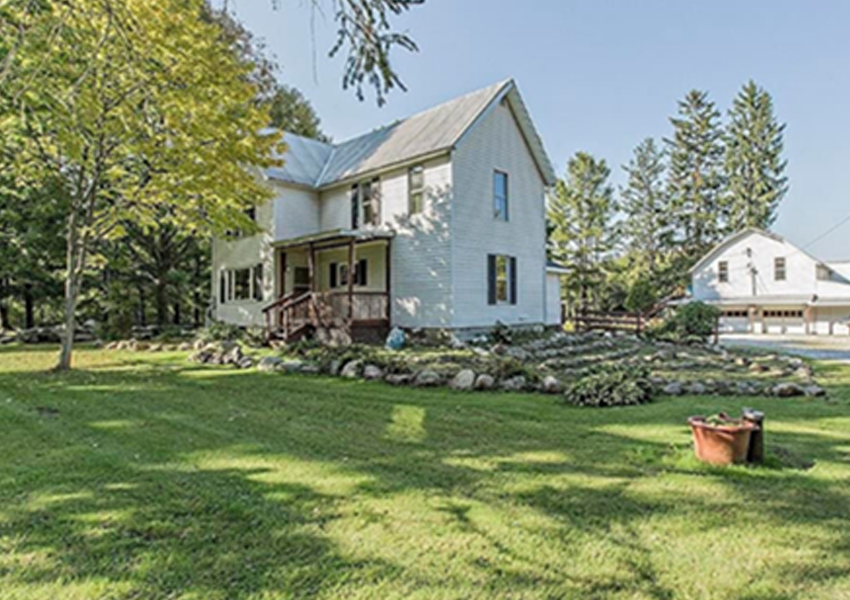
Our farmhouse stood at the end of that road. It was a two-story house built around 1880, surrounded by barns, fields, woods, and all the places that made up my childhood world.
But when I think about home today, more than sixty years later, it isn’t the farmhouse I remember first.
It’s the people.
It’s Mom and Dad, my brothers and sisters, the foster children who became part of our family, my grandparents, neighbors, friends, and the people who filled the pews at Dorset Methodist Church.
They were the ones who made that little corner of Ohio feel like home.
A Place Where Family Was Never Far Away
One of the things I remember most about growing up in Dorset was having family close by.
My McMillion grandparents lived about a mile down the road on their dairy farm. It was a working farm with roughly fifty Holstein cows, and there was always something happening.
To a little boy, the dairy barn was a fascinating place. I watched the cows being milked, listened to the machinery, and discovered that even ordinary farm work could be interesting.
My Reynolds grandparents were part of my childhood world as well. I remember the egg grading and candling, the seashell crafts, and the little things that made visits special.
I didn’t have to make an appointment to be part of my grandparents’ lives. They were simply there, woven into the everyday experiences of growing up.
I realize now how fortunate I was.
Not every child has the opportunity to know grandparents that way.
Perhaps that’s what makes a place feel like home: people nearby who know you, love you, and have been part of your life for as long as you can remember.
The Church Was More Than a Building
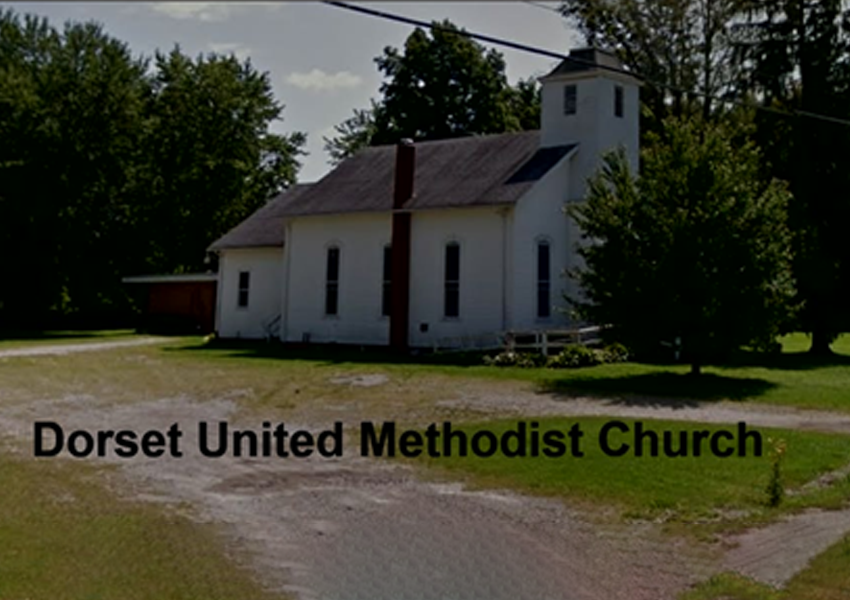
Sunday mornings meant Dorset Methodist Church.
Our family had its familiar place in the pew. We attended worship together, and church was as much a part of our weekly routine as school, meals, and farm chores.
But church wasn’t limited to Sunday mornings.
There were preparations on Saturdays, activities during the week, and opportunities for people to work together.
I remember the family routines of getting ready for Sunday and the special feeling of entering the church where so many familiar faces gathered.
As a child, I didn’t understand all the ways that little congregation was shaping my life.
I simply knew that I belonged there.
Years later, after serving as a pastor in many different communities, I came to appreciate something that began in that Dorset church.
A congregation is more than a building where people gather for worship.
It is a community of people who share their lives.
They celebrate together. They grieve together. They help one another through difficult times. They watch children grow up, families change, and generations pass.
That understanding began for me long before I ever imagined standing behind a pulpit.
It began sitting in a pew.
Friday Nights at the Community Center
Not every important memory from Dorset happened on the farm or at church.
Some happened on Friday nights at the Dorset Community Center.
Roller skating was a special event.
I remember the sound of skates rolling across the floor, the music, the Hokey Pokey, and the excitement of getting a bottle of soda pop.
There was nothing elaborate about it.
We didn’t need expensive entertainment or a trip to a distant city to have a good time.
We had friends, music, a place to gather, and the freedom to enjoy being children.
Looking back, I realize that the Community Center served a purpose much greater than providing entertainment.
It brought people together.
Children played and learned to get along with one another. Parents visited. Families shared an evening that became part of the community’s collective memory.
Those Friday nights helped make Dorset feel like home.
The People Who Made a Difference
When I think about my childhood, I also remember people outside my immediate family.
There were teachers who influenced me, neighbors who knew our family, and friends who shared adventures that would become lifelong memories.
My best friend Roger was part of many of those adventures.
Together, we explored the world around us with the curiosity and confidence that children often have before they understand all the things that can go wrong.
Some adventures ended with laughter.
Others ended with lessons we hadn’t expected to learn.
I remember my first-grade teacher, Mrs. Webster, and my second-grade teacher, Miss Berman, with her red tennis shoes.
It’s interesting what stays with us.
After all these years, I may not remember every lesson they taught, but I remember them.
Perhaps that’s another part of what makes a small town feel like home.
People become part of our story without realizing it.
A teacher, a neighbor, a friend, or someone at church may influence us in ways neither of us understands at the time.
And years later, when we look back, their faces are still there.
Small-Town Life Wasn’t Perfect
It would be easy to look back on Dorset and remember only the good things.
But childhood wasn’t perfect, and neither was life in a small rural community.
There were disagreements, disappointments, accidents, and difficult lessons.
I got into trouble, sometimes because I was curious and sometimes because I simply hadn’t thought things through.
There were moments when I was frightened, embarrassed, or hurt.
Growing up in a close-knit community didn’t prevent those experiences.
But it gave them a setting.
There were parents to correct me, grandparents to encourage me, teachers to guide me, and friends who shared both the good times and the bad.
I don’t believe that small-town life was necessarily better than life anywhere else.
It was simply the life I knew.
And for me, it provided a sense of belonging that I would carry into adulthood.
The Day Home Became Somewhere Else
When I was eight years old, our family left Dorset.
Dad had accepted a job with National Cash Register in Dayton, Ohio, and we were moving to Xenia.
I remember the Mayflower moving truck and the belongings being loaded for the trip.
Dad’s Cub Farmall tractor went along.
Mom’s electric organ went too.
But our dog, Queeny, had to stay behind.
For a little boy, that was a painful reminder that moving meant leaving some things behind forever.
Until then, Kyle Road had been the center of my world.
Suddenly, we were going somewhere else.
A different house.
A different school.
Different neighbors.
Different routines.
And no grandparents just a mile down the road.
I couldn’t have explained it at the time, but I was discovering something important.
A house can be replaced.
A childhood cannot.
The people and experiences that made Dorset home were becoming memories.
Discovering Home in Other Places
As the years passed, I lived in many communities.
Our family moved from Ohio to Virginia. Later, marriage, work, and ministry took me to North Carolina, Florida, and back to Virginia.
Each move meant another opportunity to discover what made a place feel like home.
Sometimes it happened quickly.
Sometimes it took longer.
As a pastor, I eventually learned that every congregation and community had its own personality.
Some were welcoming from the beginning. Others required time and patience before relationships developed.
But the places that came to feel most like home had something in common.
They were places where relationships grew.
Where people learned to trust one another.
Where someone noticed when you were missing.
Where joys were shared and burdens were carried together.
In that sense, the lessons of Dorset followed me wherever I went.
What Kyle Road Taught Me About Home
For many years, I thought of Kyle Road simply as the place where I grew up.
Now I understand that it was much more.
It was where I first experienced family, friendship, faith, responsibility, and belonging.
It was where ordinary people helped shape the person I would become.
The farmhouse was important.
So were the barn, the woods, the tractor, and the country road.
But none of those things would have meant nearly as much without the people who shared them with me.
That is one of the discoveries behind my memoir, Beyond Kyle Road: A Journey of Faith, Family, Memories & Purpose.
The book follows the road that carried me away from Dorset and through many different seasons of life.
But it also explores something I didn’t fully understand as a child.
Home is not simply where we live.
It is where we learn to belong.
And sometimes, long after we have left a place, we discover that the people who made it home are still traveling with us—in our memories, our values, our faith, and the way we treat others.
Beyond Kyle Road by Steve McMillion
A Memoir by Steve McMillion
A Journey of Faith, Family, Finding Home
Steve McMillion traces a life that begins on a family farm in Dorset, Ohio, and travels far beyond it. Through faith, family, memories, and a sense of purpose, the memoir asks what home means after the road has led elsewhere.
The memoir shows how the lessons of small-town life follow a person through work, love, loss, and service. It does not treat home as a place you simply leave behind.
Rural Community Books Worth Exploring
Each of these books looks at small-town life or rural community relationships from a different angle, and the order is not a ranking.
Beyond Kyle Road by Steve McMillion: This memoir follows Steve McMillion from a farm at the end of Kyle Road in Dorset, Ohio, into a life of work and service. It shows how family, faith, and shared memories keep a hometown present wherever a person lands.
Winesburg, Ohio by Sherwood Anderson: Sherwood Anderson’s linked stories portray the everyday residents of a fictional Ohio town, each marked by loneliness, longing, and private struggle. It is a sobering counterpoint to cozy small-town images, showing how closeness and isolation can share the same streets.
Plainsong by Kent Haruf: Kent Haruf’s novel follows the ordinary residents of Holt, Colorado, a fictional plains town. When two older ranchers take in a pregnant teenager, neighbors reveal both kindness and limits. It captures how quiet generosity operates in a small, watchful town.
Jayber Crow by Wendell Berry: Wendell Berry's novel is narrated by a barber in the fictional farming town of Port William, Kentucky. Over several decades, he observes neighbors, land, and loss, and learns what belonging requires. It is a patient meditation on place and community.
Why This Matters
Census figures can describe a town, but they cannot explain why a porch light left on still means something. Memoirs, oral histories, and family stories preserve the details that records skip: who organized the supper, which road flooded every spring, how a congregation held together through a hard year.
Beyond Kyle Road is one such account, written from inside the experience.
First-hand stories give readers a grounded view of small-town life, including its contradictions. They also protect local identity, because a rural community that stops telling its stories risks forgetting what it values. Reading them with care helps outsiders understand a place without flattening it into a postcard.
Coming Home to Dorset
What makes a small town feel like home? No single quality does it. It is a pile of them: familiar faces, shared faith, work done for others, and memories pinned to particular fields and roads. Dorset, Ohio, shows how family history and small-town life can shape a person long after they leave the farm gate.
McMillion’s journey down and beyond Kyle Road suggests that home is less a location than a set of relationships you carry with you. A rural community earns that kind of loyalty slowly, through ordinary days. Anyone trying to understand where they come from might start by asking older neighbors for their stories, writing a few down, and noticing which ones still quiet the room.
What Place Do You Still Call Home?
I suspect most of us have a Kyle Road somewhere in our past.
It may be a farm, a neighborhood, a small town, or a city street.
It may be a house that no longer exists or a place we haven’t visited in decades.
But when we remember it, certain people and moments return.
A family meal.
A childhood friend.
A favorite teacher.
A familiar church pew.
A grandparent’s voice.
For me, that place will always be Kyle Road in Dorset, Ohio.
What place do you still think of as home, and who made it special?
I’d enjoy hearing your memories.